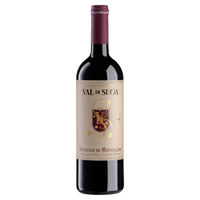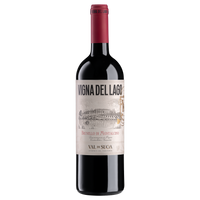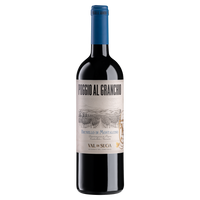


Val di Suga
Three Vineyards, Three Perspectives on Montalcino
Montalcino may be defined by a single grape, but it is far from a single terroir. Across its hillsides, Sangiovese encounters dramatically different soils, exposures, elevations, and climatic influences, each capable of shaping Brunello in a distinctive way. For Val di Suga, understanding those differences has become a lifelong pursuit. With vineyards positioned on three different sides of Montalcino, the estate has created something remarkable: three individual perspectives on one of Italy's greatest wine landscapes.
Val di Suga's story began on the northern slopes of Montalcino, in a valley crossed by the small Suga stream. During the 1960s, land traditionally devoted to arable crops and fruit trees was gradually converted to vines, and in 1969 the estate began taking shape. The first harvest followed in 1973, with the first wines bearing the Val di Suga name released two years later.
Yet the defining moment came during the 1980s. Rather than viewing Montalcino solely through the traditional practice of blending fruit from different sites, Val di Suga began asking what might happen if individual vineyards were allowed to speak for themselves. In 1983, that idea gave rise to Vigna del Lago, a single-vineyard Brunello from the estate's original northern property. It marked the beginning of a philosophy that would ultimately shape Val di Suga's entire identity.
Vigna del Lago reveals the more continental character of northern Montalcino. Surrounded by rolling hills and cypress trees, with a small lake beside the vineyard, its Sangiovese grows in predominantly clay soils. The resulting Brunello reflects the cooler personality of this side of the appellation through finesse, fragrance, and elegance.
Five years later, Val di Suga added an entirely different landscape. Vigna Spuntali, on Montalcino's southwestern slope, looks toward the sea and experiences a distinctly Mediterranean influence. Here, the climate is sunnier, drier, and well ventilated, while sandy soils derived from Pietraforte lie among olive trees, myrtle, rosemary, and Mediterranean scrub. Sangiovese responds accordingly, producing a Brunello of greater breadth and richness, yet retaining the freshness and savoury character brought by the maritime influence.
The final piece arrived with Poggio al Granchio, on the southeastern side of Montalcino near Monte Amiata. Here the landscape changes once again. Oak and holm oak replace Mediterranean scrub, galestro schist defines the soils, and the mountain contributes to pronounced differences between daytime and nighttime temperatures. The resulting wine offers another interpretation of Sangiovese—structured, mineral, and distinctly shaped by this more continental environment.
Three vineyards. Three soils. Three microclimates. And three expressions of precisely the same grape.
Importantly, Val di Suga does not attempt to erase those differences in the cellar. Each cru follows an ageing approach chosen for its individual character, allowing the vineyard rather than a standardized winemaking formula to determine the path of the wine. The estate's Brunello di Montalcino then offers another perspective entirely, bringing fruit from its different terroirs together in pursuit of balance and harmony.
This approach makes Val di Suga's relationship with Montalcino particularly compelling. Its wines can be understood individually, but together they become something more: a study of how profoundly place can shape Sangiovese within the boundaries of a single appellation.
Today, Val di Suga continues the exploration that began with Vigna del Lago more than four decades ago. What started as a belief in the individuality of one vineyard has evolved into a collection spanning three sides of Montalcino, each revealing a different dimension of Brunello.
The grape remains Sangiovese. The appellation remains Montalcino. It is the landscape that changes—and Val di Suga has made those differences its signature.
Visit the Brand’s Website: